![]() | |
![]() 4650 Highway 17 By-Pass |
![]() By Lee Bollinger For the Independent On April 16, 2009, at approximately 5:30 p.m., I walked up the outside steps to the Burroughs & Chapin Art Museum near Springmaid Resort in Myrtle Beach for the opening of an art exhibit. I paused at the reception desk to talk to a former student of mine, Casey Church, who had recently graduated from Coastal Carolina University. Within five to 10 minutes, I suddenly felt like a brick crashed on top of my head, and I dropped to my knees. The pain was so acute that I could barely talk, but I remember numbness in my cheek and whispering to Casey to call 911. By 7 p.m., I was in an emergency vehicle racing to the Medical University of South Carolina hospital in Charleston.
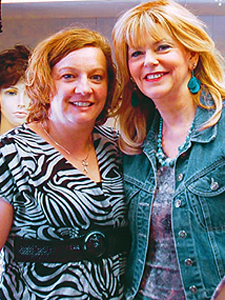
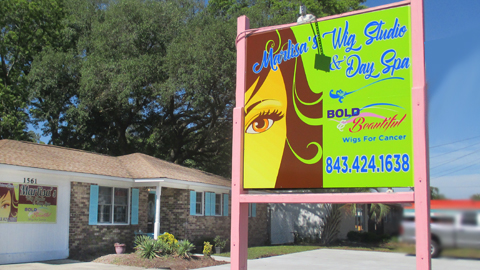
First, I was taken to Waccamaw Hospital in Murrells Inlet and had been told that a CAT scan revealed a brain aneurysm. I remember that ride with clarity. I remember the EMT attendant holding my hand and telling me 'We're going to make it.' I remember trying to understand what I had been told -- a brain aneurysm, blood leaking on my brain. By midnight, my husband and I were trying to understand the surgeon's explanation of how he was going to "coil" the aneurysm thereby cutting off the blood leakage. Three days later and after the coil procedure failed, I recovered slowly from a surgical procedure of drilling (posterional craniotomy) into the side of my forehead, and we were being told that all had gone well. The bleeding had stopped and I was very lucky. Later, I learned that my chances of surviving the surgery had been about 5 to 10 percent, and as my husband would say, 'She was more than lucky, she was a miracle.' On April 27, 2009 I was discharged. I resumed teaching at the university in July. The only criticism I have about the whole ordeal was the fact that the operating team had given me a bad hairdo. In fact, they had shaved half of the hair from my head, and I looked a sight. Before I left Charleston, I made sure I had a wig on my head. The Collins Cancer building is part of the MUSC complex and the owner of the shop had come to the hospital with a wig for me. Once I put the wig on my head, I felt whole again. Women, no matter what happens to them, want to look good! "That's perfect for you!" "That's you!" "That's gorgeous and soooo 'you'!" "That's so cute!" These are the comments you are liable to hear when entering the Wig Shop in Murrells Inlet. When a customer steps inside The Wig Shop, she steps into a social hour. Glenda Stark, Fran Hackler and Patty Murphy are not only welcoming, they are sincere, warm and concerned for the needs of their customers. While many cancer survivors buy wigs because of the loss of hair they suffer after chemotherapy, Stark says that it's more than that.
"They are ladies who want to look nice, who used to look good. With the loss of their hair, they feel they have lost part of themselves. We have repeat customers who buy multiple wigs, and we have many many styles. There's the Sassy, the Raquel Welch, the Natalie, the Ellen, the Suzanne and more, commented Stark.Wigs, wigs, wigs. They go everywhere and they are so beautiful that the fashionable synthetic wigs today are almost irresistible. Fran Hackler, an employee of the Wig Shop in Murrells Inlet says she owned a wig back in the 1960s, but they were pretty obvious. Today that is not the case. "Three years ago, I worked at Belk and a customer I noticed had gorgeous hair. I complimented her and she said it was a wig. So one day I stopped in the Wig Shop. I wear wigs out of convenience and not a medical necessity. I was so thrilled with wigs that Glenda offered me a job that day." She took the job. Hackler is surprised, she says, at how much younger people look with wigs. She figures 10 to 15 years younger. She likes helping people and can remember many cancer patients coming into the shop crying and embarrassed. "We talk to them. We tell them we understand. Then, when they would start to leave, they would turn and say, 'You just don't know what you have done for me,' Hackler said. "What surprised me even more was how many people have cancer and how such a simple thing, like getting a wig, could brighten up a person who was fighting a battle for her life. You meet so many wonderful people. We have fun, laugh and act like young girls. We tell each other secrets and share family life." The setting for the Wig Shop is the perfect place, Hackler says, because it is off the beaten path, and it has a cozy atmosphere. The rustic ceiling consists of original beams taken from an old Charleston plantation, and the floors are dated brick. The wicker furniture combines with antique lamps, fabrics draped over chairs and tables and a rich background of every color of hair imaginable displayed on mannequin heads provide a unique sense of comfort to any visitor. "We're like family and we have many precious customers," Hackler adds. When Patty Murphy entered the shop with her mother, Fran Hackler, a few years ago, she had no intention of buying a wig. She had a full head of curly hair. "I worked at a golf course a couple days a week. I went with my mother because she wanted a wig. It was an odd thing for God to send me to a wig shop. "I wasn't a cancer patient and I had lots of hair -- curly hair. But I was never happy with the curls. When I saw all the wigs with beautiful straight hair in the shop, I started trying them on. I guess that it was meant to be because I bought one and wear it several times a week." Soon, Murphy, too, was working at the Wig Shop. About 50 percent of people who come into the Wig Shop are cancer and chemo treatment survivors. Daisy Lambert, a Georgetown resident and native, is one of the shop's customers. Last September, a routine mammogram detected a problem and breast cancer was diagnosed. "God blessed me because it was caught early, but the kind of cancer, the HER2, is very aggressive and spreads fast. Her doctors attacked it fast with chemotherapy (using Herceptin) that keeps it from spreading. The hardest part of it all, she says, was going from a full head of hair to nothing. The Wig Shop has made all the difference to her. "I feel God here, and I thank God for this shop. You feel love immediately when you enter. It means a lot to be able to talk to people who are sincere. I love each of the women here. They are precious to me. When I come in here I never know which of the three will be here. It doesn't matter. All three are filled with love and understanding." Lambert does not grieve over her health problems. "You can look at the negative or focus on the positive. When I lost my daughter who was only 41-years-old to heart failure, it broke my heart, but I knew God would help me. He can give us comfort beyond comprehension or description." Sandy Callahan, a resident of Myrtle Beach and native of New Jersey, is another cancer survivor. In her case, breast cancer is one of the three types of cancer that she has endured. "The first was uterine cancer at age 29; then I went through bladder cancer and surgery at age 60. Then, last year, 2008, a regular physical exam and x-ray found a lump or nodule on my lung." Once again, Callahan went through chemotherapy. Surgery was not an option because the nodule was too close to her heart. Yet, she is optimistic. "The chemo and radiation succeeded in shrinking it from three centimeters to one. I believe in being positive and not negative. You've got to think positive. I am a veteran cancer survivor." Callahan and two of her friends just happened to stop in the wig shop one day. "We ended up having a blast. The selection is so big and the women in the shop treat you like friends. We had a lot of laughs that day. Let's face it, all women want their hair to look good." Perhaps even more positive about her medical condition is Pat Mayerhofer, a Pawleys Island resident. She, too, was diagnosed with breast cancer just before Christmas in 2005. She went through surgery in 2006, then chemo for eight months and six weeks of radiation. At that point her prognosis was good even though the type of cancer, Her-2, was very invasive.Still, she says, "I never thought, 'why me?' " One day, she stopped by the Wig Shop and had what she describes as an incredible experience. "I had developed alopecia areata -- that's when your hair doesn't grow back -- which was triggered by chemo. " She now has about eight wigs in different colors and styles. Wigs look more natural today. "They are great to have on vacations, weddings, cruises. My wig does things my hair never does," Mayerhofer says. She claims that the Wig Shop has special qualities, almost magical. "There's a spirituality about the three women. They are so well together. They provide more of a service than sales. Coming here is like coming in for therapy," she said. According to the National Retail Federation in Washington, D.C., the wig business is a multimillion dollar business with a new surge upward that parallels the 1970s when hairpieces were so popular. The surge probably parallels the intensity of cancer and treatments that cost the sacrifice of hair. Glenda Stark started the Wig Shop as a service for women who wanted to look and feel good about themselves. Eleven years later, Stark says she is not surprised by any customer's need to want to look better. She says she has seen all the different needs -- from women with cancer, brain tumors and other types of surgery, to women who have psoriasis. She has visited women in hospitals to put wigs on their heads. "I've seen it all," she says. Stark expects wigs to become more of a necessity due to medications (some drugs make the hair fall out) and of course chemo treatments. "More women will definitely need wigs due to both medical reasons and their individual genetic makeup." The ordeal I underwent with the brain aneurysm pales beside those women who undergo breast cancer (the National Cancer Institute estimates more than 192,000 women are diagnosed with breast cancer yearly and 40,000 do not survive it). Chemotherapy continues to be the number one combatant for all cancer. With chemo, hair is usually lost. Women buy wigs as much for their dignity as for their looks as with this author, Lee Bollinger Getting a wig, for Sandy Callahan, is part and parcel of being normal. "You have to live your life as normally as possible, no matter what," she says. Happily, she says, her cancer is now in remission. | ![]() |